TL;DR
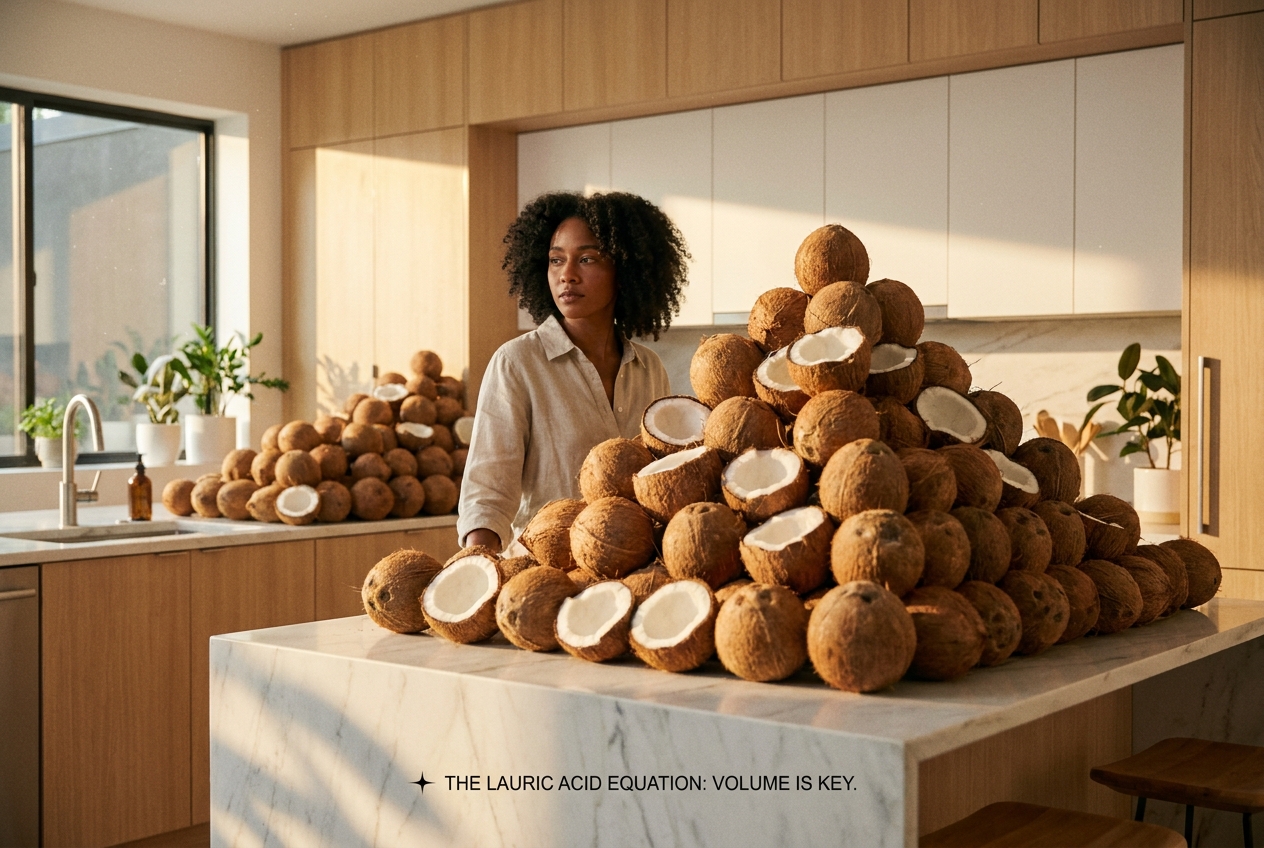
To achieve the equivalent of a standard 600mg monolaurin supplement, an individual must consume roughly 10 tablespoons of raw coconut oil daily. Although coconut oil naturally contains high levels of lauric acid, the human digestive system is exceptionally inefficient at converting this precursor into active monolaurin. The vast majority of dietary lauric acid is metabolized for general energy, rendering direct supplementation the only viable method for consistent intake.
Key Takeaways
- Dietary inefficiency: The human body converts a statistically insignificant fraction of dietary lauric acid into usable monolaurin.
- Impractical volume: Reaching a basic supplementary threshold requires consuming over 1,000 calories of pure fat from coconut oil daily.
- Metabolic priority: The liver prioritizes burning medium-chain fatty acids for immediate energy rather than synthesizing them into immune-supporting monoglycerides.
- Consistent delivery: Direct monolaurin supplements bypass the enzymatic bottleneck in the gut, providing exact measurements without the associated caloric burden.
The search for natural, food-based alternatives often leads individuals to question the exact monolaurin supplement vs coconut oil dynamic. Because the active compound is originally derived from coconuts, eating raw coconut meat or drinking coconut oil appears to be a logical substitute for capsules or pellets.
However, a direct comparison reveals a severe biochemical disconnect. The relationship between raw lauric acid in a food source and the synthesized molecule in the human body is not a direct one-to-one exchange. The physiological processes responsible for breaking down fats dictate how much of the desired compound actually reaches the systemic circulation.
The Biological Connection Between Coconut Oil and Monolaurin
To understand the conversion limits, the foundational chemistry of coconut oil must be established. Coconut oil is comprised of specific fats known as medium-chain fatty acids (MCFAs).
Among these fatty acids, lauric acid (C12) represents the most abundant single component. A study published in the International Journal of Biomaterials established that virgin coconut oil contains a lauric acid fraction of approximately 44% to 47% of its total free fatty acid composition. This high concentration is precisely why coconuts serve as the primary commercial source for raw lauric acid extraction.
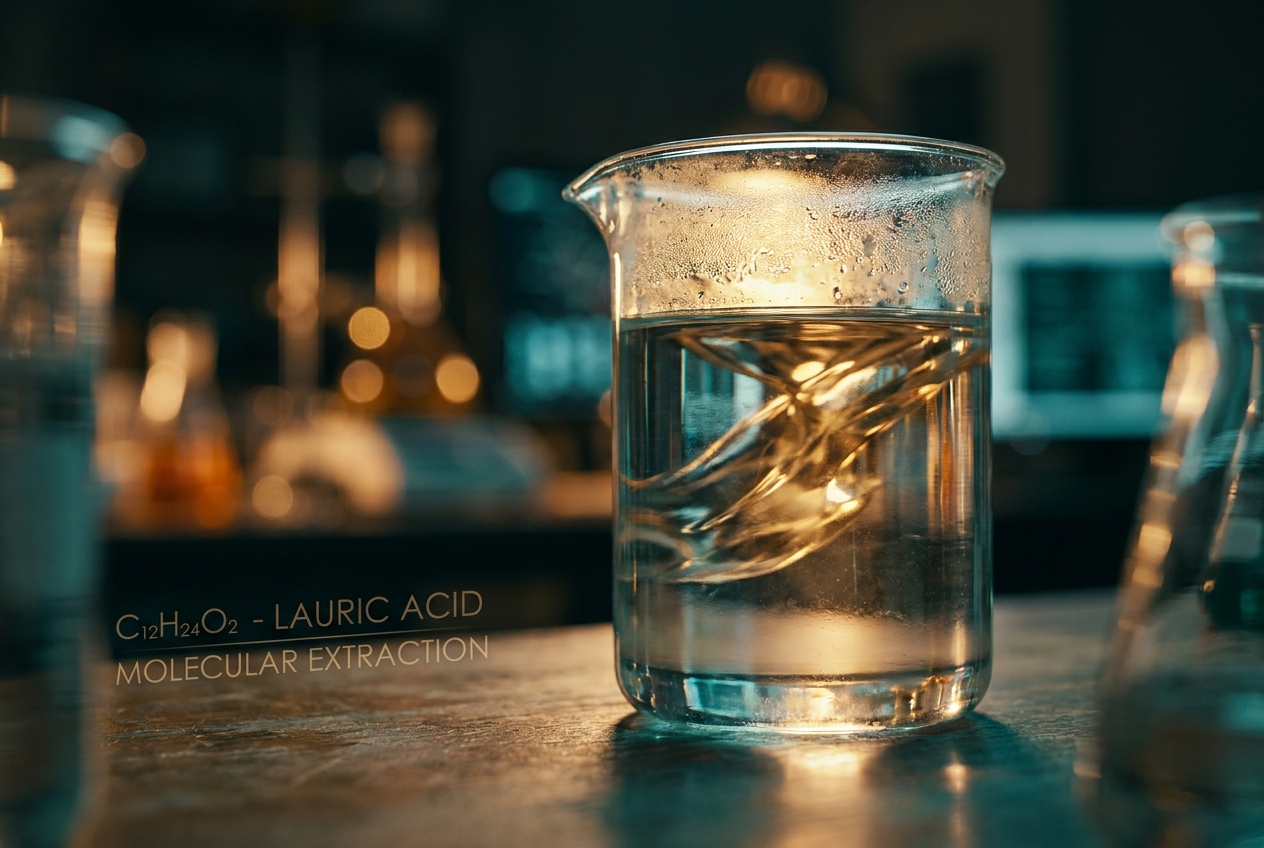
However, lauric acid and monolaurin (glycerol monolaurate) are entirely different molecules. Monolaurin does not exist in significant quantities inside a fresh coconut. It only forms when lauric acid chemically binds with a glycerol molecule. In industrial manufacturing, this synthesis is performed in controlled environments to yield a pure monolaurin supplement. In dietary consumption, this synthesis relies entirely on human digestion.
How Does the Human Body Convert Lauric Acid to Monolaurin?
The creation of monolaurin inside the body requires a specific enzymatic reaction. When an individual consumes coconut oil, the digestive tract utilizes lipase enzymes to break down complex dietary fats into smaller, manageable components.
During this digestive breakdown, a minuscule portion of lauric acid manages to bond with glycerol within the gut, creating naturally occurring monolaurin. This biological bottleneck of enzymatic conversion in the digestive tract is highly inefficient. Most raw lauric acid is shuttled directly to the liver via the portal vein. Because MCFAs are highly accessible fuel sources, the liver rapidly oxidizes the lauric acid for immediate cellular energy.
The metabolic priority of the human body is energy production, not antimicrobial synthesis. Clinical research confirms this severe limitation. An extensive rodent study published in the Journal of Medicinal Food demonstrated that the biological conversion of lauric acid to monolaurin in vivo is severely restricted. When testing systemic survival rates, direct administration of monolaurin provided robust outcomes, whereas the ingestion of lauric-acid-rich coconut oil yielded results identical to a control group. This clearly indicates that dietary consumption cannot generate therapeutic quantities of intrinsic monolaurin.
What Factors Make Dietary Conversion Impractical?
The combination of low conversion rates and heavy caloric loads makes a food-only approach physically unsustainable.
The Caloric Burden
To force the body to produce a usable amount of monolaurin through sheer volume, the dietary intake of fat must be aggressively high. An analysis of the mathematical disparity between dietary lauric acid and clinical doses confirms that achieving the equivalent of a single 600mg monolaurin capsule requires consuming more than 10 tablespoons of coconut oil daily. This equates to over 1,170 calories and 130 grams of saturated fat.
Dosage Unpredictability
The exact monolaurin supplement dosage an individual receives from food fluctuates based on individual metabolism, gut microbiome health, and concurrent digestive enzyme levels. There is no method to accurately measure how much monolaurin the body successfully synthesizes from a tablespoon of coconut oil on any given day.
Digestive Distress
Consuming raw fats in high volumes frequently leads to severe gastrointestinal distress. Nausea, cramping, and acute diarrhea are common physiological responses to sudden, excessive lipid consumption. Pure monolaurin, however, isolates the active compound and strips away the heavy triglycerides, vastly improving tolerance.
Frequently Asked Questions
Does eating raw coconut provide monolaurin?
No, raw coconut provides lauric acid, not monolaurin. The lauric acid must first be digested and chemically converted by enzymes in the human gut. This internal conversion process yields an incredibly small percentage of actual monolaurin.
Is coconut oil better than a monolaurin supplement?
For obtaining active monolaurin, a supplement is significantly more efficient. While coconut oil is a valuable whole food that provides rapid energy and healthy fats, it is mathematically impossible to consume enough coconut oil to match the precise, concentrated dosage found in a standard capsule without experiencing extreme caloric surplus.
Can you convert more lauric acid by eating more coconut?
The conversion rate does not scale efficiently. The enzymes required to synthesize monolaurin in the gut have physical limits. Consuming massive quantities of coconut oil overwhelms the digestive system and forces the liver to store or burn the excess lauric acid as energy, rather than producing more monolaurin.
Are there side effects to consuming large amounts of coconut oil?
Yes. Ingesting the 10-plus tablespoons of coconut oil required to synthesize a single dose of monolaurin introduces over 1,170 calories and 130 grams of saturated fat into the diet. This volume routinely causes acute gastrointestinal discomfort, cramping, and severe diarrhea, completely bypassing any intended benefit.
Choosing a Practical Supplement Approach

When evaluating a monolaurin vs lauric acid supplement, the distinction relies entirely on bioavailability. Lauric acid requires internal synthesis, whereas monolaurin provides the finished, active molecule directly to the system. Bypassing the biological bottleneck of the digestive tract ensures consistent, predictable intake.
Establishing a reliable routine requires tools that simplify the process. For those seeking exact measurements without the immense caloric burden of whole fats, brands like Natural Cure Labs provide pure monolaurin formulations. You can explore standard, research-aligned options directly at Shop Monolaurin. Utilizing a high-quality extract removes the metabolic guesswork and allows for accurate, standardized daily use.
Continue Exploring
References
- Ng, et al. “Hydrolysis Activity of Virgin Coconut Oil Using Lipase from Different Sources.” International Journal of Biomaterials, 2018. https://doi.org/10.1155/2018/9120942
- Preuss, et al. “In vitro and in vivo effects of two coconut oils in comparison to monolaurin on Staphylococcus aureus: rodent studies.” Journal of Medicinal Food, 2013. https://doi.org/10.1089/jmf.2012.0066