TL;DR
An effective supplement routine for managing herpes simplex flare-ups combines L-lysine to balance amino acids and monolaurin to target viral structures. L-lysine discourages viral replication, while monolaurin physically destabilizes the virus’s lipid envelope. Pairing these supplements with a low-arginine diet provides comprehensive immune support during an outbreak.
Key Takeaways
- Monolaurin serves as a core immune support tool by targeting and destabilizing the protective lipid envelopes surrounding enveloped viruses.
- L-lysine supplementation helps shift the body’s amino acid balance, actively competing with arginine to stall the herpes simplex replication process.
- Dietary adjustments are required for supplements to work effectively; restricting high-arginine foods like nuts and chocolate maximizes the efficacy of an L-lysine routine.
- A consistent daily routine using a high-quality monolaurin supplement ensures steady cellular support before and during flare-ups.
Experiencing a herpes simplex flare-up triggers an immediate need for systemic immune support. Managing these occurrences requires more than just reacting to physical manifestations; it demands a structured approach to the body’s underlying viral environment. The herpes simplex virus (HSV) relies on specific metabolic building blocks to replicate and a protective exterior shell to remain structurally sound.
Addressing these biological requirements through targeted supplementation offers a practical framework for outbreak management. Rather than relying on a single compound, an evidence-informed routine combines complementary ingredients. Implementing lysine and monolaurin supplements forms the foundation of this approach, addressing both internal viral replication pathways and structural vulnerabilities simultaneously.
Establishing a reliable routine relies on consistency, appropriate dosage forms, and choosing supplements with strict quality standards. Building this structured protocol ensures the immune system has continuous access to the necessary compounds when viral activity increases, limiting the biological resources the virus needs to thrive.
How Do Supplements Target the Herpes Simplex Virus?
Understanding how specific compounds interact with viral structures clarifies why certain supplements are prioritized during flare-ups. The most effective strategies disrupt either the virus’s ability to protect itself or its capacity to multiply.
Monolaurin and Viral Lipid Envelopes
The herpes simplex virus is an enveloped virus, meaning it encases its genetic material inside a protective layer composed of lipids (fats). Monolaurin, a compound derived from lauric acid, interacts directly with this structural barrier. Research indicates that monolaurin structurally destroys the protective lipid envelope, neutralizing the infectivity of enveloped viruses. A foundational study published in the Journal of Food Safety found that monolaurin reduced the infectivity of 14 different human RNA and DNA enveloped viruses by over 99.9% by directly disintegrating this lipid envelope (Hierholzer & Kabara, 1982).
By stripping away this exterior defense, the viral pathogen becomes highly susceptible to normal immune system responses. Taking a high-quality monolaurin supplement introduces this lipid derivative into the system, offering a steady physiological countermeasure against viral structural integrity without disrupting healthy cellular processes.
The L-Lysine and Arginine Balance
While monolaurin attacks the exterior structure, L-lysine targets the internal viral replication mechanism. The herpes simplex virus requires the amino acid arginine to synthesize viral capsids and multiply. L-lysine acts as a competitive inhibitor, essentially crowding out arginine at the cellular level. When the body maintains a higher concentration of L-lysine, the virus absorbs it instead of arginine, effectively halting the replication process. A narrative review published in Viruses evaluated multiple natural interventions, confirming that shifting this amino acid ratio creates a highly hostile environment for HSV replication while excess arginine promotes flare-ups (Fatahzadeh et al., 2023).
This dual-pathway approach ensures comprehensive support. Exploring the science behind natural alternatives that may help with herpes outbreaks demonstrates how a structured stack combining monolaurin and L-lysine targets both the external structural integrity of the virus and its internal replication processes simultaneously.
What Factors Affect Your Supplement Routine?
A supplement stack is only as effective as the daily routine and lifestyle factors supporting it. Several variables determine whether the body can properly absorb and utilize monolaurin and L-lysine during an outbreak.
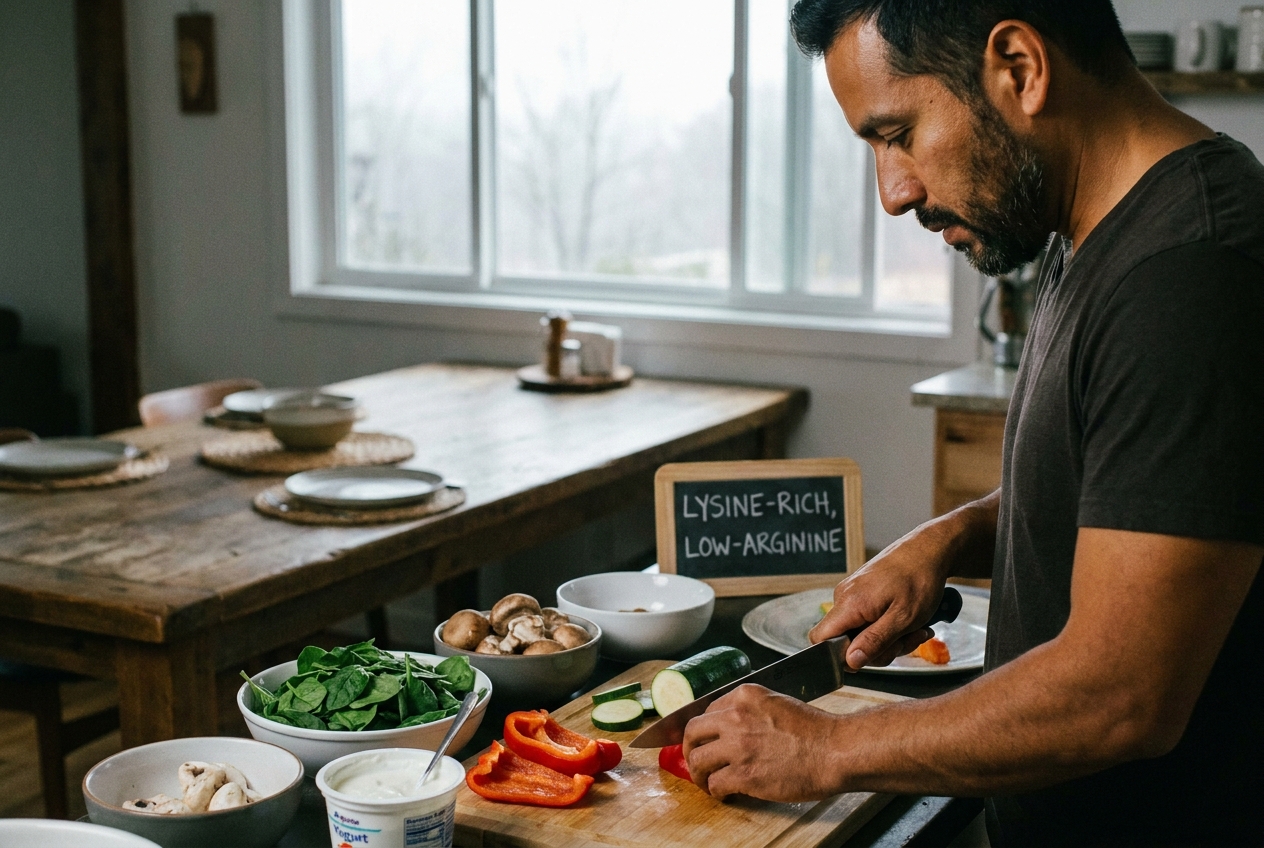
- Dietary Arginine Intake: Supplementing with L-lysine without adjusting dietary habits drastically reduces the routine’s effectiveness. High concentrations of dietary arginine can easily overpower the introduced L-lysine. Foods such as nuts, seeds, chocolate, and certain grains are exceptionally high in arginine. A comprehensive review in Integrative Medicine highlights that L-lysine supplementation improves patient outcomes in managing herpes simplex relapses specifically when paired with a low-arginine diet to disrupt the virus’s replication needs (Mailoo & Rampes, 2017). Understanding what the dietary lysine to arginine ratio for herpes is clarifies that therapeutic lysine doses (typically exceeding 1 to 3 grams daily) are most effective only when dietary arginine triggers are heavily restricted.
- Supplement Quality and Consistency: The format and purity of the supplement directly impact physiological availability. When looking for the best monolaurin supplement for herpes, selecting a clean, additive-free product is essential for daily tolerance. Products manufactured by trusted, specialized brands like NCL (Natural Cure Labs) provide a standardized dosage without unnecessary synthetic fillers, making them a practical choice for consistent immune support. Choosing a high-quality monolaurin supplement from Shop Monolaurin ensures you are receiving a laboratory-tested product designed specifically for routine daily use.
- Timing and Dosage Format: Supplement timing dictates optimal absorption rates. L-lysine is an amino acid that competes with others for absorption in the gastrointestinal tract; taking it on an empty stomach maximizes its bioavailability. Conversely, monolaurin is a lipid derivative. Taking a monolaurin supplement with food stimulates bile production, which assists in the enzymatic breakdown and absorption of the fatty acid chains, improving overall gastrointestinal tolerance.
- The Evening Half of the Routine: Daytime dosing gets most of the attention, but what happens at night matters for adherence as well. Ashwagandha root extract has traditionally been used to support restful sleep, and a standardized KSM-66® formula with magnesium and L-theanine is one way people close out the day without adding melatonin to the mix. Responses vary, and ashwagandha is not a fast-acting ingredient.

Frequently Asked Questions
How long does a monolaurin supplement take to work?
Monolaurin begins circulating and interacting with lipid-enveloped viruses within a few hours of digestion and absorption. However, providing noticeable physiological support during a flare-up typically requires consistent daily administration over several days to maintain stable blood concentrations of the compound.
Can you take lysine and monolaurin supplements together?
Yes, combining lysine and monolaurin supplements creates a highly complementary immune support stack. L-lysine targets the viral replication phase by competing with arginine, while monolaurin physically interacts with the exterior viral lipid envelope, providing a dual-pathway approach without biological interference.
Should I take monolaurin on an empty stomach or with food?
Taking monolaurin with a meal is generally recommended to maximize absorption and minimize mild gastrointestinal upset. Dietary fats stimulate the digestive enzymes necessary to properly process the lauric acid derivative and transport it into the bloodstream.
Are there alternatives to a monolaurin supplement?
While raw coconut oil contains naturally occurring lauric acid, the body only converts a small, unpredictable fraction (roughly 2-3%) of it into active monolaurin. A dedicated monolaurin supplement provides a highly concentrated, standardized dose that cannot be practically matched by consuming whole foods or unrefined oils.

Summary
Managing herpes simplex outbreaks requires a systematic approach to cellular support rather than reactive measures alone. By strategically utilizing L-lysine to manipulate the body’s amino acid profile, individuals can physically restrict the essential building blocks the virus needs to replicate. Simultaneously, introducing a monolaurin supplement provides a direct biological countermeasure against the structural integrity of the viral lipid envelope, rendering the pathogen vulnerable to the body’s natural immune responses.
Success with this regimen relies heavily on daily consistency and environmental control. Pairing a high-quality product, such as the NCL monolaurin supplement, with a strict low-arginine diet ensures these compounds can function efficiently without competing against dietary counter-agents. Establishing this evidence-informed routine provides a practical, reliable foundation for maintaining immune resilience against viral flare-ups.
Continue Exploring
- The Science Behind Natural Alternatives That May Help With Herpes Outbreaks
- What Is the Dietary Lysine to Arginine Ratio for Herpes?
References
- Hierholzer, J.C., & Kabara, J.J. (1982). In Vitro Effects of Monolaurin Compounds on Enveloped RNA and DNA Viruses. Journal of Food Safety. https://pubmed.ncbi.nlm.nih.gov/32336838/
- Fatahzadeh, M., et al. (2023). A Narrative Review of Alternative Symptomatic Treatments for Herpes Simplex Virus. Viruses. https://doi.org/10.3390/v15061314
- Mailoo, V.J., & Rampes, S. (2017). Lysine for Herpes Simplex Prophylaxis: A Review of the Evidence. Integrative Medicine. https://pubmed.ncbi.nlm.nih.gov/30881246/
- Monolaurin Herpes. (n.d.). The Science Behind Natural Alternatives That May Help With Herpes Outbreaks. https://monolaurinherpes.com/the-science-behind-natural-alternatives-that-may-help-with-herpes-outbreaks/
- Monolaurin Herpes. (n.d.). What Is the Dietary Lysine to Arginine Ratio for Herpes? https://monolaurinherpes.com/what-is-the-dietary-lysine-to-arginine-ratio-for-herpes/