TL;DR
Monolaurin is a compound derived from lauric acid that demonstrates notable antibacterial and anti-inflammatory properties. Research indicates that monolaurin targets the protective lipid envelopes of acne-causing bacteria like Cutibacterium acnes, actively neutralizing them while simultaneously helping to calm localized skin inflammation.
Key Takeaways
- Monolaurin physically disrupts the protective membrane of acne-causing bacteria, limiting their ability to survive and replicate.
- The underlying compound has demonstrated an inhibitory effect on specific skin bacteria at significantly lower concentrations than standard clinical benchmarks.
- Beyond bacterial control, monolaurin possesses anti-inflammatory properties that calm the localized tissue response associated with acne.
- Selecting a high-quality monolaurin supplement is crucial for individuals looking to support their body’s systemic response to skin stressors.
Introduction
Skin blemishes and persistent breakouts are primarily driven by an overgrowth of bacteria, excess sebum production, and the body’s inflammatory response. While topical routines focus on surface-level management, evaluating internal dietary tools offers a complementary approach to skin health.
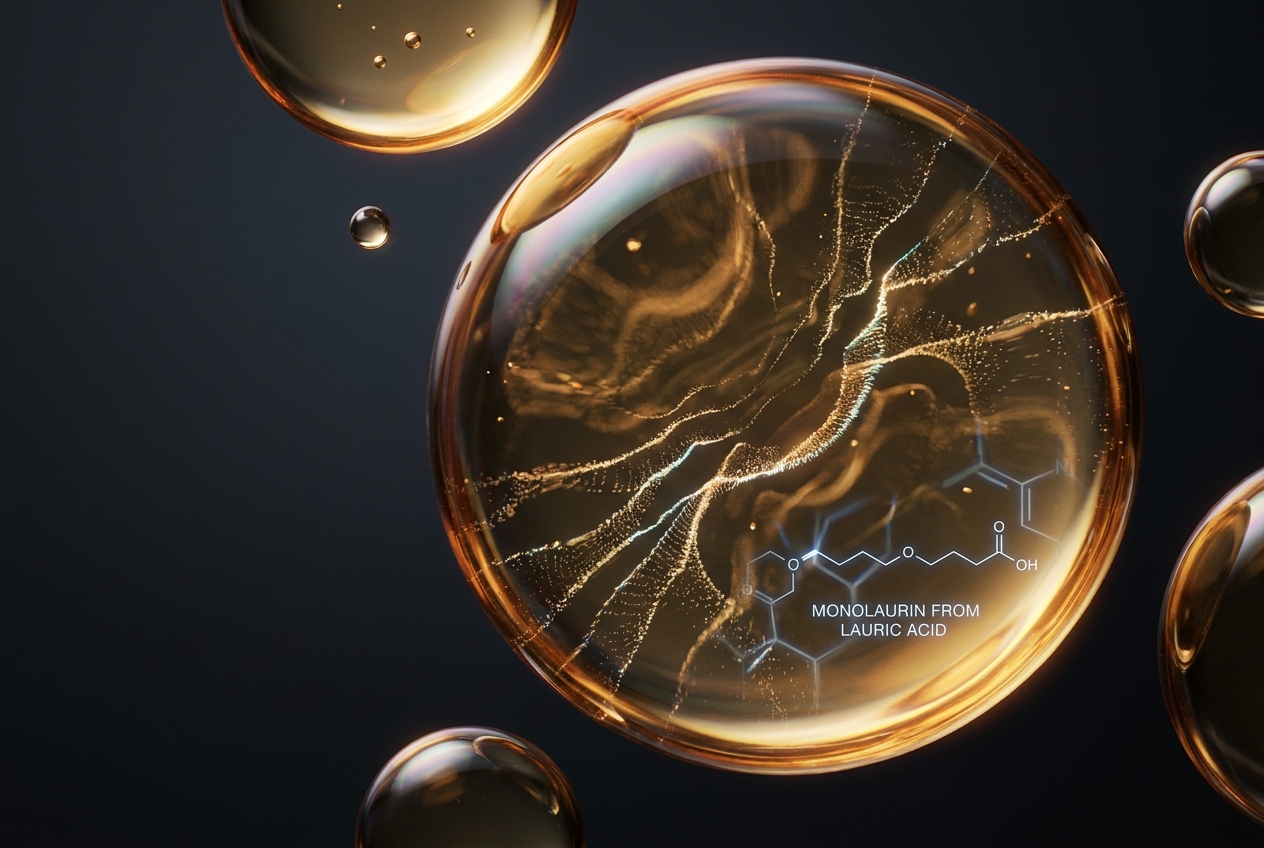
Among the compounds studied for managing pathogenic bacteria, monolaurin—a monoester formed from glycerol and lauric acid—has gained traction due to its distinct biochemical properties. Originally identified in human breast milk and coconut oil, this compound interacts directly with microbial structures. Understanding the specific monolaurin supplement benefits requires examining how it behaves at the cellular level against the primary biological culprits of acne.
How Does Monolaurin Work Against Acne Bacteria?
The primary biological mechanism behind monolaurin involves structural degradation of microbial defenses. The specific target is Cutibacterium acnes (C. acnes), the anaerobic bacterium responsible for most inflammatory acne.
When monolaurin comes into contact with specific bacteria, it binds to their cellular structures. Monolaurin exerts severe bactericidal effects by directly increasing bacterial membrane permeability and physically disrupting the cellular lipid envelope, leading to the rapid eradication of even robust, antibiotic-tolerant persister cells (Li et al., 2026). Because C. acnes relies on this lipid layer for survival, the structural disruption effectively neutralizes the bacterium.
This physical mechanism of action is highly potent. Lauric acid exhibits potent bactericidal activity against Propionibacterium acnes (C. acnes), demonstrating a minimum inhibitory concentration (MIC) over 15 times lower than that of benzoyl peroxide (Nakatsuji et al., 2009). Unlike traditional compounds that disrupt biological pathways, monolaurin’s physical disruption mechanism makes it difficult for bacteria to develop resistance.
Furthermore, managing acne requires addressing the body’s inflammatory response to bacterial presence. Topical and internal applications of glycerol monolaurate (monolaurin) function dually as potent antibacterial and anti-inflammatory agents, actively reducing pathogenic bacterial counts while simultaneously suppressing localized tissue inflammation on the skin (Mueller et al., 2015). This dual-action mechanism targets both the root cause of the breakout and the subsequent redness and swelling.
What Factors Affect Monolaurin’s Impact on Skin Health?
The practical impact of monolaurin on skin wellness depends on several implementation variables. Consistency and format play critical roles in how the body processes and utilizes the compound.
- Purity and Formulation: The raw quality of the supplement dictates its bioavailability. When looking for a monolaurin supplement online, prioritizing pure formulations free from synthetic binders ensures the active compound can be properly metabolized. For reliable results, prioritizing a high quality monolaurin supplement—such as those formulated by Natural Cure Labs (NCL)—provides a consistent concentration of the active ingredient.
- Administration Route: Research observes efficacy in both topical and systemic applications. While laboratory studies often use direct topical application against isolated bacteria, oral supplements support the body’s systemic immune response and internal microbial balance.
- Dietary Consistency: Monolaurin is metabolized as a lipid. Regular, sustained intake is required to maintain active levels of the compound within the body. Intermittent use fails to provide the steady biological pressure needed to manage persistent bacterial populations.
Frequently Asked Questions
Can you take monolaurin supplements daily for skin health?
Yes, monolaurin is a dietary supplement synthesized from lauric acid and is generally recognized as safe for daily use. Maintaining a consistent daily routine ensures stable levels of the compound are available to support immune function and systemic health.
How long does a monolaurin supplement take to work?
The timeframe depends on the individual’s metabolic rate and the severity of the bacterial imbalance. While biochemical interactions with bacteria occur rapidly upon contact, visible changes to skin clarity and inflammation reduction typically require several weeks of consistent, daily administration.
Is it safe to combine monolaurin with traditional skincare routines?
Monolaurin operates through distinct biological mechanisms that do not inherently conflict with topical skincare ingredients like salicylic acid or retinoids. Integrating a monolaurin supplement acts as a systemic complement to an existing topical regimen.
How do I choose the best dosage form monolaurin supplement?
Selecting the best dosage form monolaurin supplement depends on digestive preference and routine consistency. Encapsulated forms, specifically those utilizing plant-based capsules without unnecessary fillers, offer precise measurement and straightforward integration into daily habits. You can explore pure, standard-setting options at shopmonolaurin.com.
Summary

Monolaurin presents a robust, research-backed mechanism for addressing the biological factors behind acne. By physically dismantling the protective lipid envelopes of Cutibacterium acnes, the compound neutralizes the bacteria responsible for localized breakouts. Coupled with its ability to suppress tissue inflammation, monolaurin offers a dual-action approach to skin health. Implementing a high-quality, pure supplement into a consistent daily routine provides a practical, evidence-informed strategy for managing the internal variables that dictate skin clarity.
References
- Nakatsuji T, et al., Antimicrobial property of lauric acid against Propionibacterium acnes: its therapeutic potential for inflammatory acne vulgaris, Journal of Investigative Dermatology, 2009. https://doi.org/10.1038/jid.2009.93
- Li Y, et al., Monocaprin, Monolaurin, and Monomyristin Eradicate Staphylococcus aureus Persister Cells Through Membrane Disruption, Pharmaceuticals, 2026. https://doi.org/10.3390/ph19050690
- Mueller EA, et al., Non-aqueous glycerol monolaurate gel exhibits antibacterial and anti-biofilm activity against Gram-positive and Gram-negative pathogens, PLoS One, 2015. https://doi.org/10.1371/journal.pone.0120280